
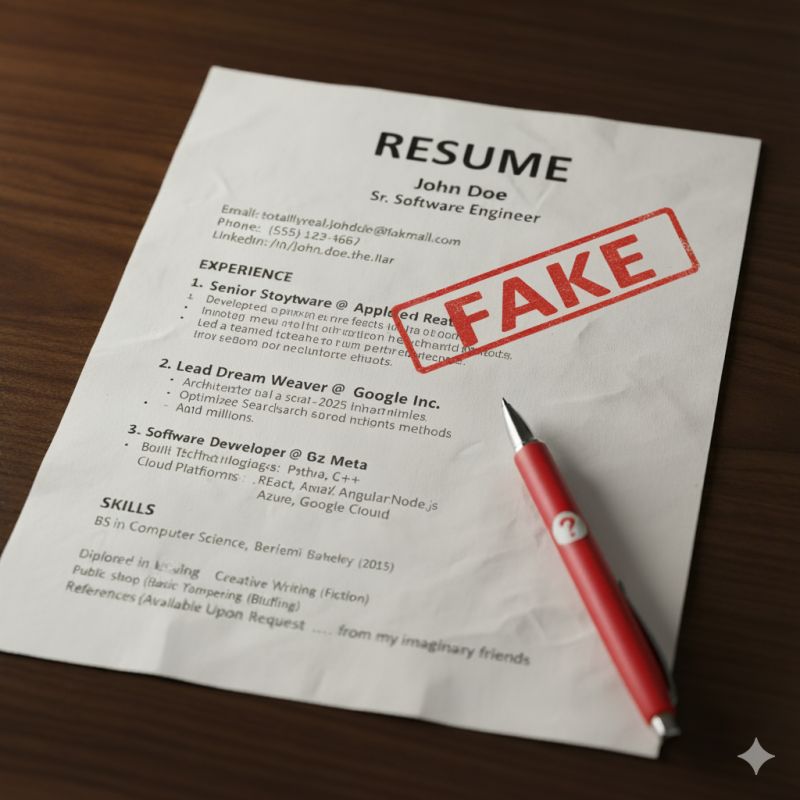
In almost every hiring conversation we’re having right now, one theme keeps coming up:
“I’m seeing more polished resumes than ever… but I’m not always sure how real they are.”
With AI tools now able to spin up a slick, keyword-optimized resume in minutes, it’s easier than ever for candidates to look perfect on paper – whether or not their experience truly matches. That doesn’t make candidates dishonest by default, but it does mean hiring managers need to adjust how they review and interview.
The good news? With a few tweaks to your process, you can embrace the upside of AI while still getting to the real story behind each profile.
The New Resume Reality: Why Everything Looks So Good
AI has changed the front end of the hiring process:
- Resumes are cleaner, more targeted, and packed with the “right” keywords.
- Bullet points sound more strategic and more senior than the person may actually be.
- Candidates can quickly tailor their experience to your job posting – sometimes a little too neatly.
On the flip side, many great candidates are also using AI just to format and clarify what they’ve actually done. The challenge is not “AI = bad,” but “How do we tell who can really do the work?”
For Hiring Managers: Five Ways to Get Past the AI Gloss
1. Interview the Details, Not the Headline
Instead of asking, “Tell me about your role at X,” try:
- “Walk me, step by step, through the last month of a typical close cycle.”
- “When you say you ‘led’ this project, who else was involved and what exactly did you own?”
Specific, chronological questions make it very hard to fake experience at a high level.
2. Ask for Concrete Examples and Artifacts
Where appropriate, request:
- Example reports, dashboards, or templates (scrubbed of confidential data).
- A short case question: “How would you approach [real scenario from your team]?”
You’re looking for how they think, not for perfection.
3. Test for Depth, Not Just Vocabulary
AI can give candidates the vocabulary of your world – ERP systems, FP&A, SOX, FMLA, cost accounting, HRIS – but not the scars.
Use follow-ups like:
- “What went wrong the first time you implemented this and how did you fix it?”
- “What’s a decision you made in this area that you’d make differently now?”
People who’ve actually done the work can talk comfortably about mistakes and tradeoffs.
4. Calibrate with References and Internal Benchmarks
Don’t just check whether a reference says “yes, they worked here.” Ask:
- “If you were hiring them again, what level role would you put them in today?”
- “Where did they shine, and where did they need more support?”
Compare their answers to how your own high performers in similar roles operate.
5. Partner with Specialists Who Know the Work
For niche fields like accounting, finance, HR, and operations, working with a recruiter who lives in that space daily can save you from chasing AI-polished mirages.
At Pegasus, for example, we’re constantly pressure-testing experience in our conversations long before a resume hits your inbox – so you’re spending your time with genuine fits, not just good writers.
For Job Seekers: Using AI Without Losing Your Authenticity
AI can absolutely help candidates:
- Clean up formatting and grammar
- Turn vague bullets into clearer, impact-focused statements
- Tailor resumes toward roles they’re truly qualified for
Where it backfires is when the resume becomes more fiction than fact.
A few guidelines if you’re on the candidate side:
- Use AI to clarify, not to invent. If you didn’t lead it, don’t claim you did.
- Make sure you can explain every bullet in detail during an interview.
- Keep your own list of real examples and metrics so you’re not surprised by your own resume.
Long term, your reputation in a tight market matters a lot more than how slick your resume sounds.
Navigating Hiring in an AI World: What Both Sides Can Do
Employers can:
- Simplify job descriptions to focus on the 4-5 must-have capabilities.
- Build structured interview guides that test real skills, not just personality.
- Shorten bloated processes – AI makes it easier for candidates to juggle multiple pipelines, so slow teams lose out.
Job seekers can:
- Be transparent about how they used AI (“I used it to clean up wording, but the experience is mine”).
- Focus on outcomes: how did your work save time, reduce errors, improve processes?
- Ask smart questions about how the company evaluates success and supports growth.
AI hasn’t changed the core question for either side: “Can this person do the work, and is this a place where they can succeed long term?” It’s just put a shinier layer on top of the process.
How Pegasus Staffing Partners Fits In
At Pegasus Staffing Partners, we sit between these two realities every day:
- We help hiring managers go beyond AI-polished resumes to truly understand candidates’ experience, judgment, and fit.
- We help job seekers present their background clearly and honestly so they’re evaluated on what they can actually do.
If you’re:
- A hiring manager struggling to tell who’s real in a stack of perfect-looking resumes, or
- A candidate trying to stand out the right way in a noisy market,
we’d love to talk.