
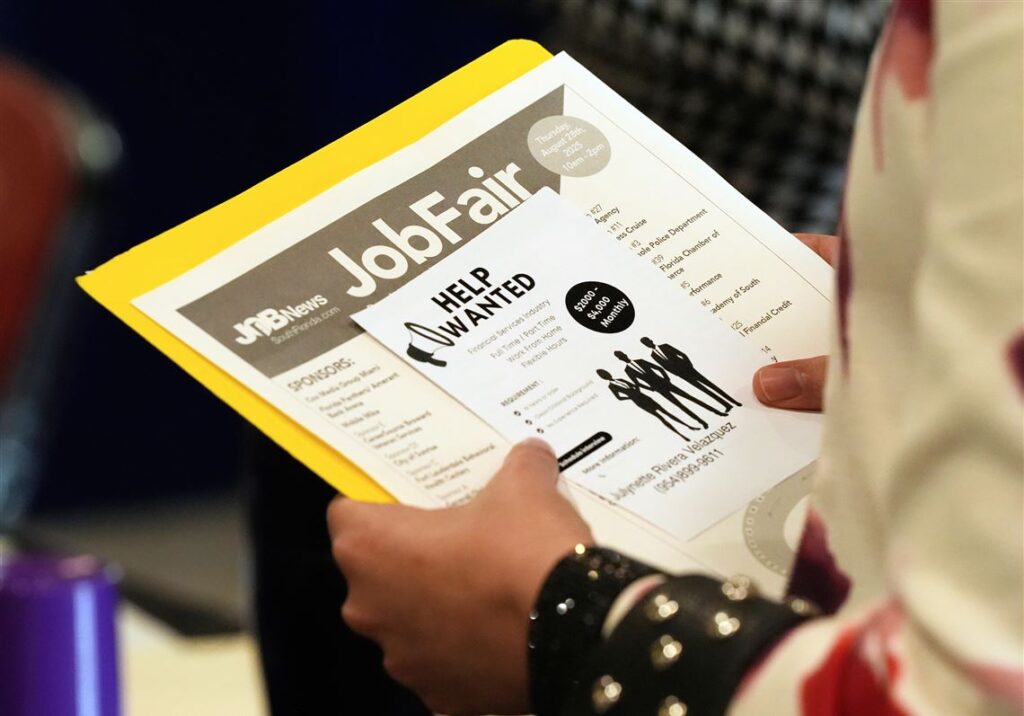
The April 2026 jobs report showed a modest but better‑than‑expected gain of 115,000 jobs, with the U.S. unemployment rate holding steady at 4.3%. For employers and job seekers in Dallas-Fort Worth, that means a labor market that is cooling from the post‑pandemic surge but still relatively healthy – especially compared with many other parts of the country.
The headline numbers: Slower, steady growth
According to the Bureau of Labor Statistics, total nonfarm payrolls increased by 115,000 in April, beating many forecasters who were expecting gains in the 55,000-62,000 range. The unemployment rate was unchanged at 4.3%, roughly where it has hovered in recent months.
A few key details behind the headline:
- Private employers added about 123,000 jobs, while government payrolls shrank by roughly 8,000.
- Health care once again led the way with more than 37,000 new positions, especially in nursing, residential care, and home health.
- Transportation and warehousing added around 30,000 jobs, driven by parcel delivery and logistics.
- Manufacturing and parts of information services continued to struggle, with small job losses in April.
The big picture: the labor market is no longer in “red‑hot” mode, but it’s also not in a recessionary free fall. It’s a slower, more selective environment where quality and fit matter more than sheer speed.
How Texas and DFW are positioned
Zooming in, Texas continues to out‑perform many states on job growth. The Dallas Fed’s April Texas Employment Forecast projects statewide job growth of about 1.9% in 2026 – roughly 278,000 new jobs this year – with unemployment around 4.3%. That’s very much in line with the national jobless rate, but with a faster underlying growth trend.
Within Texas, Dallas-Fort Worth remains one of the state’s strongest metros:
- DFW job growth over the three months ending in February ran at a 1.6% annualized pace, despite a soft February print.
- The DFW unemployment rate dipped to 3.9% in February – below both the Texas and U.S. averages.
- Recent gains have been concentrated in natural resources and construction, professional and business services, leisure and hospitality, trade/transportation/utilities, and manufacturing.
For employers, that combination – solid growth plus a sub‑4% unemployment rate – means continued competition for qualified talent, particularly in white‑collar and skilled roles. For candidates, especially in professional fields, DFW remains one of the more attractive and resilient markets in the country.
What this means for DFW employers
In a “slower but still tight” market, the way you hire matters as much as who you hire.
For DFW companies in accounting, finance, operations, and HR, the April report and local data suggest a few practical realities:
- You still can’t assume strong talent is sitting idle. Sub‑4% unemployment in DFW means your next great hire is probably already employed and will need a compelling reason to move.
- Candidates are more cautious. After a choppy few years, many professionals are prioritizing stability, clear growth paths, and culture fit over chasing the very highest offer.
- Time‑to‑hire can be a differentiator. In a market where national growth is modest, high‑quality candidates often juggle multiple conversations. A structured, decisive process is a competitive advantage.
We’re seeing more DFW employers sharpen role definitions, streamline interview steps, and lead with clarity about impact, flexibility, and advancement opportunities – especially for mid‑level and leadership roles in accounting/finance and HR.
What this means for DFW job seekers
If you’re a job seeker in the Dallas–Fort Worth area, the April report offers a mixed but generally encouraging signal:
- Nationally, conditions are cooler than in 2022-2023, but jobs are still being added and unemployment is stable.
- Locally, a 3.9% unemployment rate means DFW continues to outperform the U.S. as a whole.
- Growth in sectors like professional and business services, trade/transportation, and health care creates ongoing demand for finance, operations, and HR talent that supports these businesses.
Practically, candidates need to bring a bit more preparation and intentionality to the search:
- Be ready to speak to measurable impact in prior roles – cost savings, process improvements, revenue support, or people metrics.
- Expect more rigorous interviews and stakeholder panels, even when roles are backfilled rather than net‑new.
- Don’t wait for a “perfect” market; instead, look for strong teams and durable business models.
How Pegasus Staffing Partners fits into this picture
In a market where national growth is modest, Texas growth is solid, and DFW remains relatively tight, finding the right match – not just any match – matters.
Pegasus Staffing Partners works with growth‑minded companies across the DFW metroplex to fill direct‑hire roles in:
- Accounting
- Finance
- Operations
- Human Resources
We help clients translate shifting market conditions into real hiring strategies: competitive yet sustainable compensation, realistic profiles, and search processes that respect both business timelines and candidate experience.
If you’re:
- An employer planning to hire in the next 3-6 months and want to know how the current market affects your search, or
- A candidate in accounting, finance, operations, or HR considering a move in 2026,
we’d be happy to talk about what the April jobs data means for you specifically.
You can reach us through Pegasus Staffing Partners or connect with us on LinkedIn to stay updated on DFW hiring trends and new opportunities.