
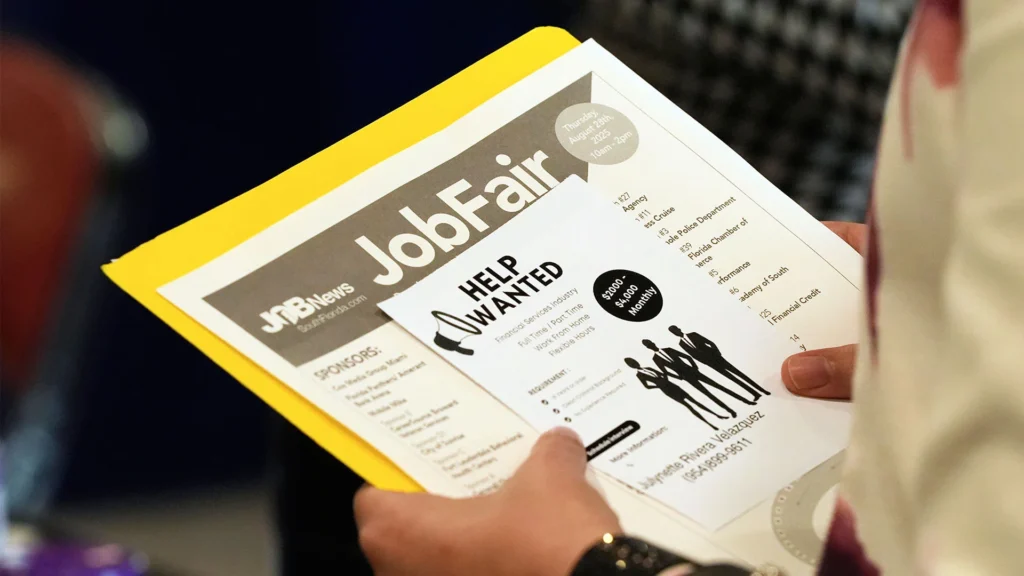
If you work in accounting, finance, HR, or operations, you’re probably hearing two very different stories right now.
On one hand, everyone’s talking about “talent shortages” and “critical skill gaps.” On the other, job searches are dragging out, headcount approvals are slow, and roles are sitting open for months while teams quietly absorb the extra workload.
Welcome to 2026’s low‑hire, low‑fire reality. Companies know they can’t afford to lose great people in these functions, but they’re also cautious and deliberate about every new hire. That tension is exactly where both candidates and employers are getting stuck – and where small, smart moves can make a big difference.
Below are practical, today-ready steps for both sides of the table.
What’s really happening in 2026
The demand for strong accounting, finance, HR, and operations professionals hasn’t gone away – it’s changed shape.
Organizations still need clean financials, tight controls, compliant HR practices, and smooth operations. They’re also under pressure to modernize: more automation, more analytics, and more insight from the same or fewer people. That means roles are broader, expectations are higher, and hiring decisions are more scrutinized than ever.
At the same time, AI and automation are reshaping job content rather than replacing these professionals outright. Tools are handling more of the repetitive work, while humans are expected to interpret data, tell the story, influence decisions, and partner with the business. Candidates who show they can do that are winning interviews and offers – even in a cautious market.
For candidates: Three moves to stop waiting and start winning
If you’re a candidate in accounting, finance, HR, or operations, this is not the time to sit back and “wait for things to improve.” The market is rewarding people who treat their careers the way their companies treat strategic projects: with a plan, a business case, and clear ROI.
1. Turn “AI and tools” into a real story
Listing software on your resume isn’t enough anymore. Hiring managers want to know what you did with those tools.
Instead of:
“Proficient in Excel, Power BI, and NetSuite.”
Try something like:
“Built a Power BI dashboard that reduced month‑end variance review time by 30% and helped leadership catch a recurring margin issue in under one quarter.”
The same idea applies for HRIS, ATS, ERP, CRM, or ops systems. Connect tools to outcomes: time saved, errors reduced, revenue protected, compliance issues avoided, or employee experience improved.
Ask yourself: if you had to explain your value to a CFO or CHRO in one slide, what would be on it?
2. Trade “spray and pray” for targeted, intentional applications
In a cautious market, random applications burn energy and rarely convert. You’ll get more traction by going deeper into fewer, better‑aligned opportunities.
A simple weekly rhythm you can follow:
- Choose 5-10 roles that truly match your background and salary expectations.
- For each one, customize your resume to mirror the language of the posting (without copying it) and highlight 3-5 directly relevant accomplishments.
- Identify one human connection – a recruiter, hiring manager, or mutual connection – and send a short, specific note explaining why you’re a fit and what outcome you can deliver.
You don’t need 200 applications. You need the right 20, with a clear story and a human touch.
3. Network with intent, not volume
Endless connection requests won’t move the needle. Strategic relationships will.
A few places to focus:
- Recruiters who specialize in your lane (for you: accounting/finance, HR, or operations recruiting in your geography or niche).
- Hiring leaders you’d actually like to work for – controllers, CFOs, HR directors, operations leaders.
- Professional groups where your peers and future managers actually spend time (local finance councils, HR associations, industry groups).
When you reach out, avoid “Do you have any openings?” and instead try:
- “I’m exploring senior accounting roles focused on process improvement and systems projects – is that something you anticipate adding to your team this year?”
- “I’ve led two HRIS implementations and I’m looking for HRBP or HR operations roles where tech enablement is a priority. Could I ask you two quick questions about how your team is structured?”
Your goal is to be top-of-mind when the right role opens, not to force the wrong role at the wrong time.
For employers: Three moves to stop stalling and start hiring smart
On the employer side, the risk isn’t over‑hiring; it’s under‑resourcing critical functions until something breaks — an audit issue, a missed close, a compliance problem, or rising turnover in core teams.
1. Treat accounting, finance, HR, and ops as risk functions, not just cost centers
If you’re feeling pressured to “hold off until Q4” on that accounting manager, payroll lead, HRBP, or operations analyst, ask a different question:
“What is the cost – in risk, burnout, and missed opportunity – of not filling this role?”
Consider:
- Are you relying on one or two people who “know everything” with no backup?
- Are deadlines being met at the expense of accuracy, analysis, or employee experience?
- Are strategic projects (system upgrades, integrations, process improvements) stalled because your key people are stuck in tactical work?
Once you frame the role in terms of risk and resilience, it becomes easier to justify a thoughtful hire – even in a cautious environment.
2. Run “direct‑hire + interim” instead of either/or
A common pattern right now: the team is drowning, but leadership wants to wait for the “perfect” hire. Months go by, the team burns out, and the business loses ground.
Instead of choosing between “wait for direct hire” and “live with the gap,” consider a two‑track strategy:
- Launch a direct‑hire search for the long‑term finance, accounting, HR, or operations leader you truly need.
- At the same time, bring in interim or contract support to keep the wheels on: a senior accountant to help with close, an HR generalist to stabilize employee relations, an operations coordinator to get processes documented.
You buy time and protect your existing team while you search – and you often discover that your interim person can either step into the role or provide a crystal-clear benchmark for what you want.
3. Price for 2026 skills, not 2022 salary bands
Compensation is one of the biggest hidden reasons searches stall. Companies are looking for 2026 skills – AI-fluent, data-savvy, business-facing professionals – but trying to hire at 2022 pay levels.
When you scope a role, ask:
- “If this person truly delivers what we’re asking – tighter controls, better reporting, improved retention, operational improvements – what is that worth to the business?”
- “Are we expecting a blend of technical skill, systems savvy, and stakeholder influence? If so, does our range reflect that?”
You don’t have to chase the top of the market on every search, but you do need ranges that acknowledge how the role has evolved. Otherwise, you end up with long timelines, rejected offers, and a tired team.
Stop waiting for the “perfect” market
The truth is, there is no “perfect” market coming – just different versions of the one we have now.
For candidates in accounting, finance, HR, and operations, that means:
- Get crystal clear on the value you create.
- Translate your tools and tech into business outcomes.
- Be selective but intentional with where and how you show up.
For employers, it means:
- Stop treating these functions as optional overhead.
- Protect your core teams with the right mix of permanent and interim support.
- Align your expectations, timelines, and compensation with today’s reality – not yesterday’s budget.
If you’re a professional in these fields who’s ready to stop waiting and start moving, or an employer who knows your team can’t absorb “one more quarter” of extra work, this is the moment to rethink your strategy – not to hit pause again.
What part of this resonates most with what you’re seeing day-to-day: candidate expectations, employer caution, or the way roles themselves are changing?